

What is Poetry Slam?
For those who may not know, poetry slam is a competitive art form in which poets perform original work before a live audience and a panel of judges. While competitive poetry has existed across cultures for centuries, contemporary poetry slam emerged in Chicago in the 1980s through the work of poet Marc Smith and the community that gathered at the Green Mill.
In the decades since, slam has grown into a worldwide movement with its own legends, traditions, and generations of poets continually reshaping the art form. Formats vary, but the essentials are simple: poets take the stage with only their words, bodies, and voices; audience judges score what they experience; and the poem and its performance meet in the room together.
At its heart, slam is an invitation to occupy a space and fill it with your story. Prize money and recognition are sweet rewards for those who go all the way, but what keeps poets and audiences coming back is something bigger: the possibility that, for three minutes, one voice can change the energy of an entire room.
The Chicharra Poetry Slam - A Southwest Regional Championship
Chicharra brings more than 80 poets from across the country to Albuquerque for Team and Individual Championships, a $5,000 prize pool, a Southwest Regional title and some of the most electric poetry you’ll hear all weekend. The competition is serious, but the point is poetry. We believe a great slam should make room for different voices, styles, bodies, and ways of performing—and that what happens between a poet and a room matters more than any single score.
2027 Competition at a Glance
The Chicharra Slam brings Team and Individual competition to multiple venues across Albuquerque, with two preliminary bouts determining who advances to the Champions Stage.
Team Competition: 4–5 poets per team with 4 teams per bout
Individual Competition: solo poets with up to 12 poets per bout
Preliminaries: two bouts per competitor
Champions Stage: top four teams + top four individuals
Time limit: 3:00 + 10-second grace period
Judging: five audience judges
Prize pool: $5,000 in total prizes
Dates: March 24–27, 2027
We Love Our Poets
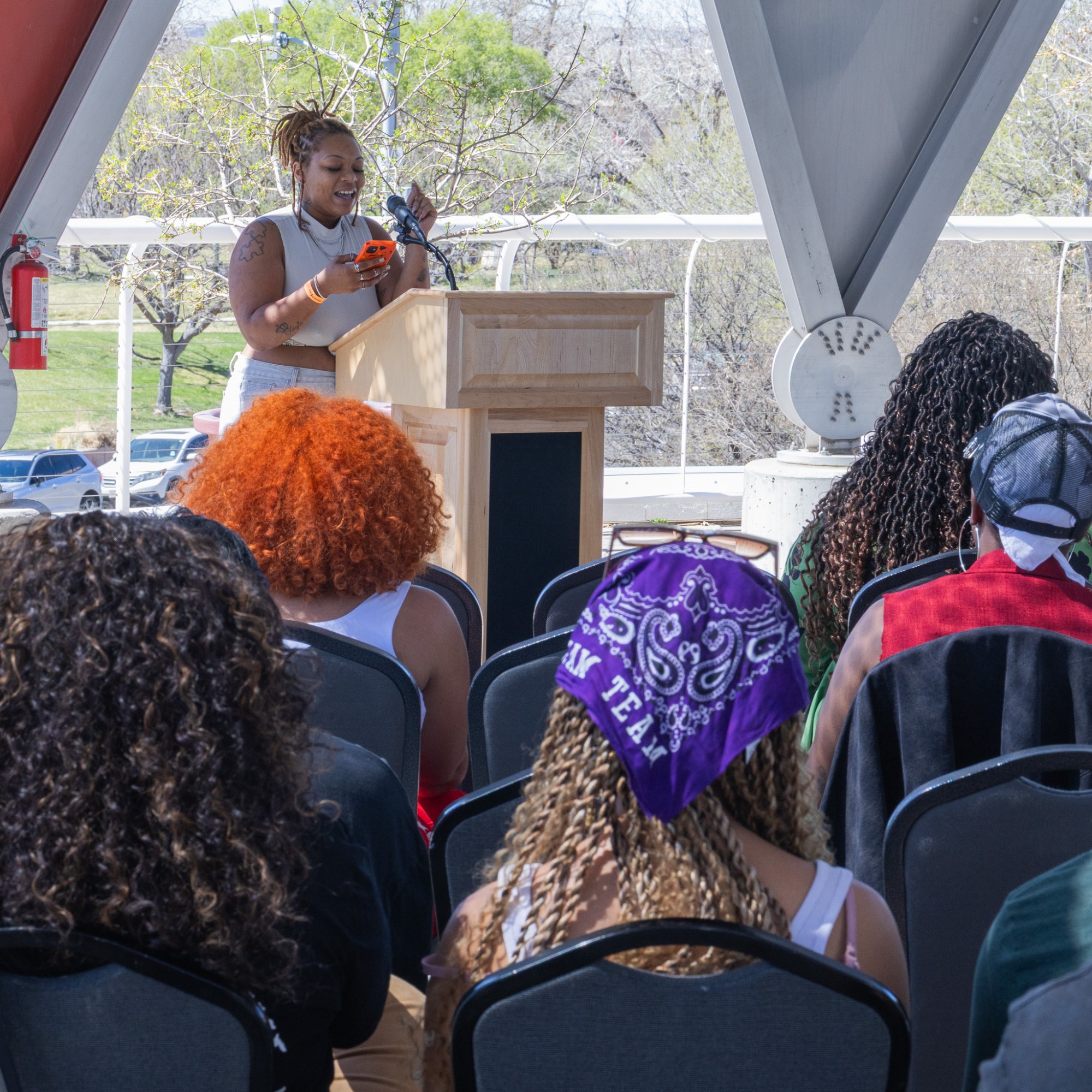
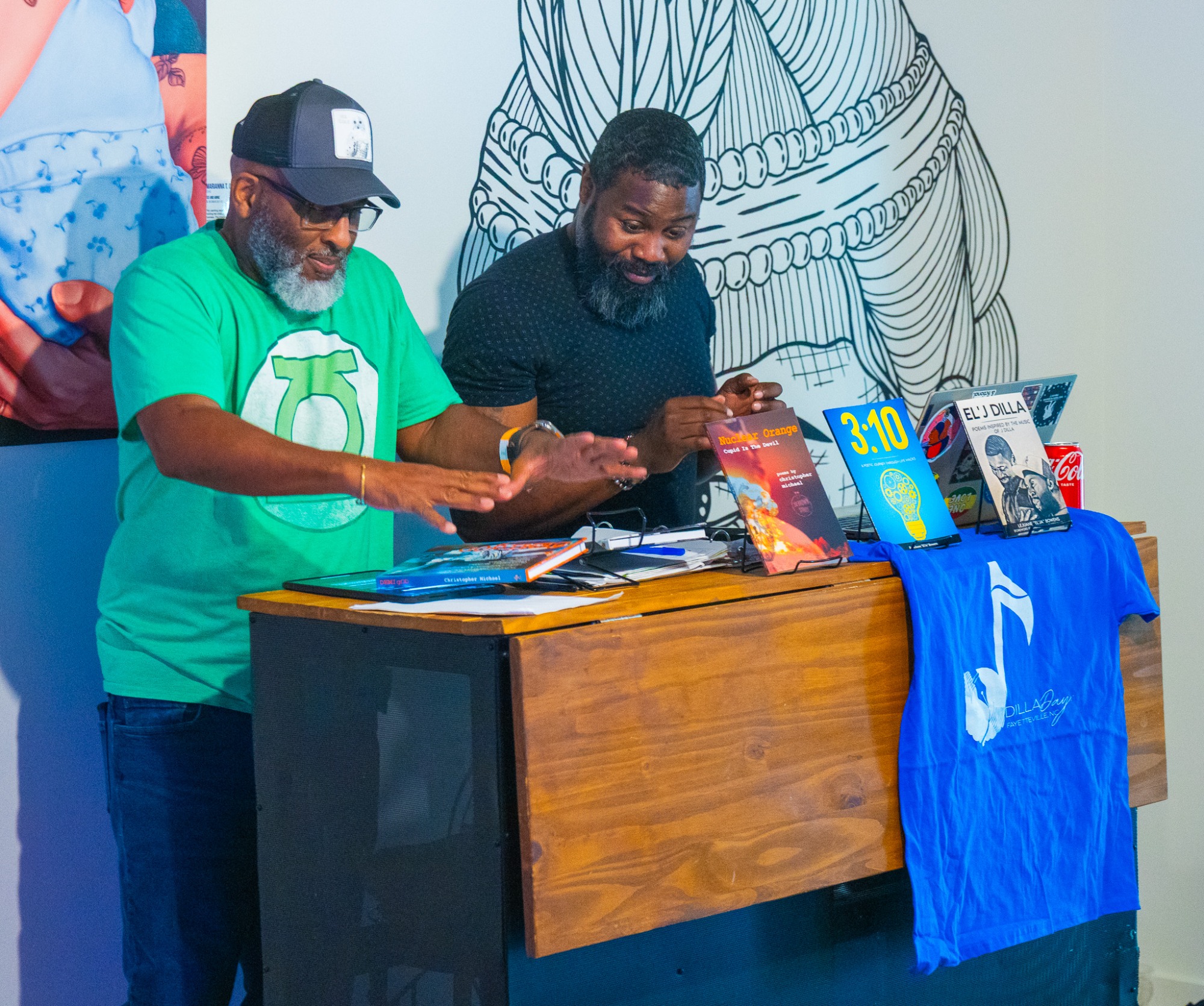
Over the last three years, the Chichara Poetry Slam Festival has drawn some of the most remarkable talent in spoken word and poetry slam from across the country to our lovely desert city. If you'd like to see more information on our past champions or poets scheduled to compete in the coming year, click the links below.
An archive of the poets and teams that have worn the title of Regional Champions at the Chicharra Poetry Slam Festival!
With more than 80 poets representing upwards of 30 cities, this ist is a veritable Who's Who of Slam Poets & Spoken Word Artists!




Format
For Information on the Rules & The Protest Process, Scroll Down
How Preliminary Competition Works
Every team and individual poet competes in two preliminary bouts over two nights of competition. Each night, three bouts take place simultaneously at separate venues, with Early and Late sessions. Teams and individual poets alternate between Early and Late bouts so that every competitor receives one of each.
Bout assignments are determined through a public random draw before the festival, so competitors will know when and where they are scheduled to perform well in advance. Performance order within each bout is drawn onsite before competition begins.
Team bouts consist of four teams competing across four rounds. Each team performs four poems per bout and should prepare eight poems for preliminary competition. Solo poems, group pieces, or any combination of the two may be used. Each team member is assigned one spot per bout, which may be used for a solo piece or a group piece for which that poet is the primary author.
Individual bouts consist of up to twelve poets competing across two rounds. Individual poets should prepare four poems for preliminary competition.
Poems may not be repeated during preliminaries. All performances have a 3-minute time limit with a 10-second grace period.
After each bout, a team representative or individual competitor must review and sign the official bout sheet, confirming that the recorded scores are accurate.
How Scoring Works
Each performance is scored from 0.0 to 10.0 by five audience judges. The highest and lowest scores are dropped, and the remaining three scores are added to determine the poem's score. Scores from each round are cumulative within the bout.
At the end of each preliminary bout, competitors receive a rank based on their final cumulative score: first place receives a rank of 1, second place a 2, and so on.
Preliminary ties are not broken within the bout. Tied competitors share the same rank, and the tournament's tiebreak procedures are used only when necessary to determine overall standings and advancement.
Reaching the Champions Stage
After both preliminary bouts, each competitor's two ranks are added together to determine their overall preliminary ranking. Lower totals are better.
For example, a poet who finishes 1st and 1st earns a combined rank of 2. A poet who finishes 1st and 4th earns a combined rank of 5.
The four teams and four individual poets with the lowest combined ranks advance to the Chicharra Champions Stage.
If two or more competitors are tied at the advancement line, Chicharra uses the following tiebreakers, in order:
- Relative Strength — compares the average combined rank of the competitors each tied poet or team faced. The competitor who faced the stronger field—the field with the lower average combined rank—wins the tiebreak.
- Point Differential — compares how far each competitor finished behind the first-place score in their preliminary bouts. The smaller combined differential wins.
- Best Single Rank — the competitor with the best finish in either preliminary bout advances.
- Highest Total Score — combined raw scores from preliminary competition are compared.
- Coin Flip — if every previous measure remains tied, advancement is determined by chance.
The Champions Stage
The top four individual poets compete in a three-round final, while the top four teams compete in a four-round final. Scores are cumulative within each championship.
Finals performance order is determined during a required orientation one hour before doors open. All finalists and sacrificial poets must be present.
In the event of a tie for first place, the tied poets or teams may choose either to perform one additional poem to determine the champion or to share the title and prize. If the title is shared, the next-highest-scoring competitor is awarded third place.
The Rules
All competitors are responsible for knowing the tournament rules before competition begins. Questions about a rule should be directed to the Tournament Director before your bout whenever possible.
Props
Props may not be used during competition. A poet may not deliberately incorporate an object into a performance by holding, pointing to, or verbally referencing it as part of the poem.
Objects available equally to all competitors—such as a microphone, mic stand, or chair provided onstage—are not considered props. Mobility and accessibility devices, including glasses, canes, and wheelchairs, are considered extensions of the poet and are never considered props.
Penalty: 1-point deduction.
Original Work, Sampling & Plagiarism
Poets must perform original work. Up to 15 seconds of another poet's work may be quoted or sampled, provided the original artist is credited during the performance. Attribution may appear in the poem itself, its introduction or title, or elsewhere in the performance, but it must be audible to the audience.
Sampling beyond the allowable limit results in a 1-point deduction.
Plagiarism is not a sampling violation. Any competitor found to have knowingly presented another artist's work as their own will be disqualified from the tournament without refund.
Primary Author Rule — Team Competition
Each team receives four performance slots per bout. A slot may be used for either a solo poem or a group piece. Teams with five registered members are not required to use every team member in every bout.
For a group piece, one poet must be identified as the primary author and must have contributed the majority of the writing. Every poet performing the piece must also have contributed to its creation.
The poem uses the performance slot of its primary author, and no team member may serve as primary author for more than one poem in the same bout.
Teams will identify the primary author of each poem on the official bout sheet at the conclusion of competition.
Costumes
Costumes and performance-related clothing changes are not permitted. Adding or removing clothing specifically to enhance a poem or influence its reception will be considered a costume violation.
Ordinary adjustments to clothing that are not part of the performance are not violations.
Penalty: 1-point deduction.
Bout Draw & Late Arrival
Performance order is determined by random draw at the venue before each preliminary and Champions Stage bout.
Any competitor who arrives after the bout draw has begun will automatically receive the one spot and perform first. If multiple competitors arrive late, the earliest available positions will be assigned according to arrival time; competitors arriving together will draw randomly for those positions.
Competitors should arrive early enough to complete the draw before the scheduled start of their bout.
Repeat Rule
Poems may not be repeated during preliminary competition.
Competitors who advance to the Champions Stage may repeat one poem previously performed during preliminaries. A second or subsequent repeated competition poem results in a 1-point deduction for each violation, but the competitor may continue competing.
Poems performed at open mics, showcases, or other noncompetitive festival events do not count as repeats under this rule.
Judge Interference & Collusion
Competitors, teams, coaches, and affiliated supporters may not attempt to manipulate or improperly influence the judging of a bout.
This includes attempting to influence a judge before or during competition; encouraging a judge to favor or disadvantage a particular competitor; deliberately placing a friend, family member, teammate, coach, or other person with a known affiliation to a competitor on the judging panel without disclosing that relationship; or otherwise coordinating with audience members or judges in an attempt to affect the outcome of a bout.
Simply knowing, supporting, or having a relationship with a competing poet does not constitute a violation. The violation occurs when that relationship is concealed in order to place an affiliated person on the judging panel, or when someone attempts to use that relationship to influence scoring.
If an audience member selected as a judge has a significant relationship or affiliation with a competitor in the bout, they should disclose that relationship to bout staff before accepting the judging position so staff can determine whether another judge should be selected.
A competitor or team found to have deliberately engaged in judge interference or collusion will receive the lowest rank in that preliminary bout.
The Protest Process
Rule Violations & Resolving a Protest
Competitors and coaches are responsible for knowing the tournament rules and identifying potential violations. Bout staff will not independently file protests or police performances for rule violations. This helps ensure that tournament staff remain neutral in the administration of each bout.
A protest may be filed by any poet or team competing in the bout in which the alleged violation occurred.
Protests should be raised immediately or as soon as reasonably possible. If approaching the MC or Bout Manager would disrupt competition, notify the scoring table, and staff will alert the appropriate official.
Once a protest has been filed, bout staff are responsible for administering the protest process. If the violation—or absence of a violation—is clear, the MC or Bout Manager may resolve the protest immediately and apply any required penalty.
If the issue cannot be resolved immediately, the competitors involved will be notified and the bout will continue. The matter will then be referred to the Tournament Protest Committee for review. Competitors involved in the protest should meet with the MC or Bout Manager immediately following the bout.
A competitor disputing the official bout results should not sign the bout sheet until the protest has been resolved.
Decisions made by the MC or Bout Manager may be appealed to the Protest Committee. The decision of the Protest Committee is final.
Our goal is to resolve protests as fairly, consistently, and efficiently as possible while allowing the competition—and the poetry—to remain the focus of the festival.
Rule-Violation Penalties
Violation Penalty
Prop violation 1-point deduction
Sampling beyond allowable limit 1-point deduction
Costume violation 1-point deduction
Repeat-rule violation 1-point deduction
Judge interference or collusion Lowest rank in preliminary bout
Plagiarism Disqualification without refund